# Making motion graphics with Claude Opus 5.5: building a video studio with code from an empty folder
URL: https://opcaios.org/en/blog/motion-graphics-claude-opus-5-5
Date: 2026-10-29
Author: Lê Quốc Nghĩa
Making motion graphics with [Claude](/tien-ich/claude) means having [Claude Code](/tien-ich/claude-code) write code (HTML, React or p5.js) that describes each frame, then using a tool like FFmpeg to build it into a video with music, voiceover and logo, without needing to open After Effects. According to Hamza Khalid, author of the "AI in Public" tutorial series (posted on X on 30/9/2026, over 312 thousand views on X), the secret lies in the setup rather than the prompt: the prompt accounts for only 10% of the result, setup accounts for 90%. This piece rewrites that guide in Vietnamese, with all images and videos from the original, and compares each code repository and installation command on GitHub as of 23/10/2026.
*The author's 25-second brand introduction film, built with Claude Opus 5.5: every frame and sound is code. Video: Hamza Khalid (AI in Public), taken from [the original post on X](https://x.com/humzaakhalid/status/2105203643758895454).*
*Cover image of the original post. Image: Hamza Khalid.*
## What is motion graphics by code?
Motion graphics by code is the way to create animations of text, shapes and interfaces using source code: each frame is drawn from HTML, CSS, canvas or React, then a tool assembles the frames into an MP4 file. Because everything is text, a code-writing model like Claude can read, edit and run it again, instead of having to drag and drop in graphics software.
According to the author, the reason to spend a weekend learning this is that video has gotten cheap very fast: he tells of someone who paid over $1,000 for a launch video a year ago, then last week made one video with Claude in less than 30 minutes (this is the account of the original post author, not independently verified). Anthropic released Claude Opus 5.5 on 22/9/2026, and according to the author, within hours after that his timeline was filled with introduction videos and music videos built from code, mostly captioned "one prompt".
## Why does "one prompt" actually need 90% setup?
The prompt accounts for only 10% of the result, setup accounts for 90%: that is Hamza Khalid's argument in his post on 30/9/2026 on X. The decisive part of whether a video looks good or rough is the brand, reference materials and rules that Claude is given before starting. The author quotes a note from Thariq (from Anthropic's Claude Code team): the post says "Claude one-shot this", but the prompt behind it is about 10 thousand characters long, with skills, examples and API keys. To verify for himself, the author takes a prompt going around, runs it as-is and gets a "so-so" result. There are two errors:
1. The character's head floats because there is no neck and body below.
2. The text color clashes with the background to the point of being hard to read.
Ultimately, for example: the same prompt but with a brand folder containing logo and color scheme means Claude does not need to pick colors on its own.
*"Claude Pop": 6 seconds of the opening of a music video built from code, taken from the original post. Video: Hamza Khalid.*
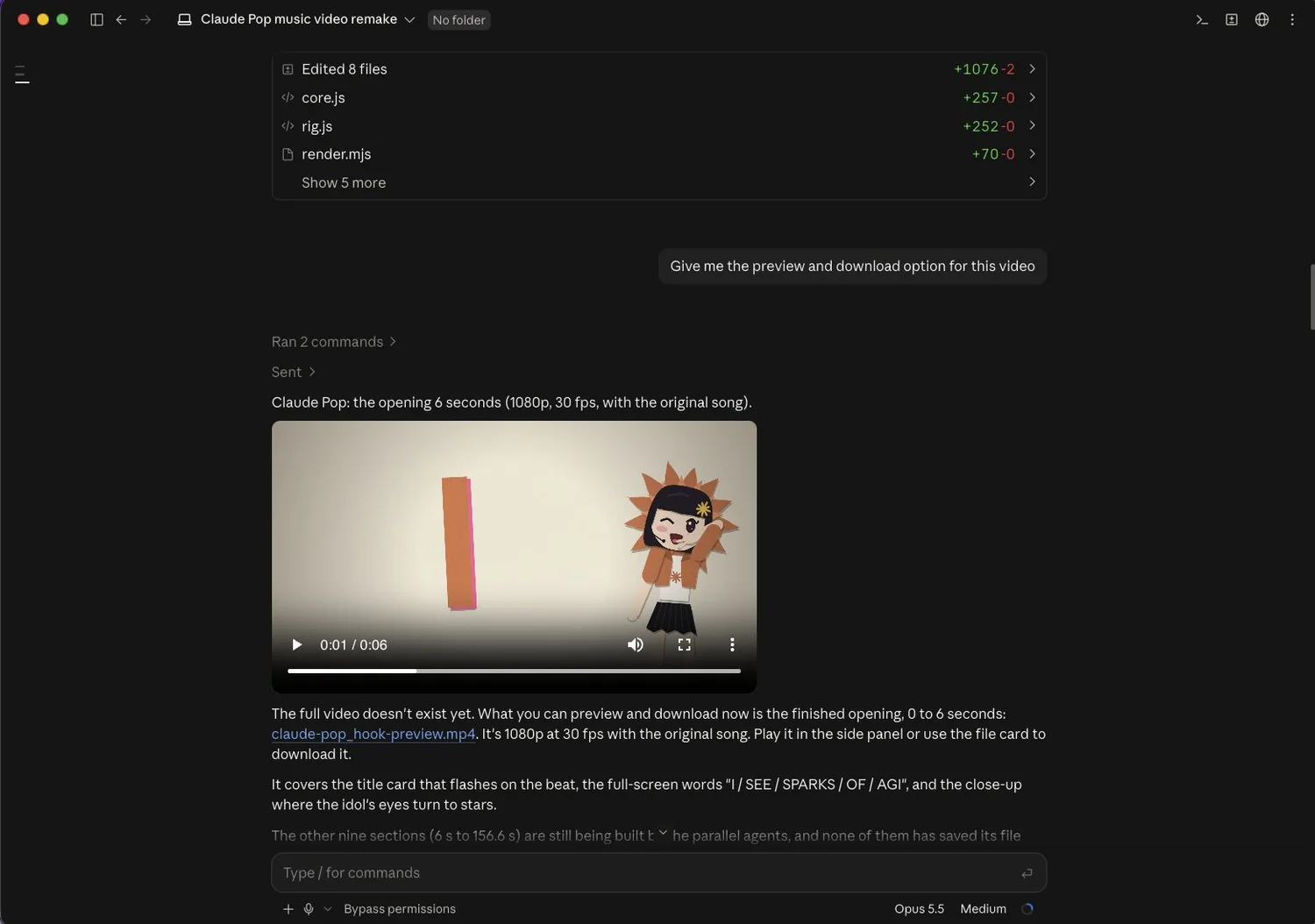
*Claude Code rebuilds the "Claude Pop" music video, with a 6-second preview right in the chat window. Image: Hamza Khalid.*
## Step 1: Create a brand folder to use as your video workshop
The brand folder is where every video starts: Claude Code works in the folder you open, so putting your reference library, skills, brand files, and rendered products all in one place means later videos can build on earlier ones. This takes about a minute. Steps in Claude Code:
1. Open Claude Code.
2. Click on the **No folder** box (or the name of the folder currently selected).
3. Click **Open folder**.
4. Click **New Folder**.
5. Name it after your brand (I named mine `video-motion-lab`) and click **Create**.
6. The new folder is now selected, and that's your workshop.
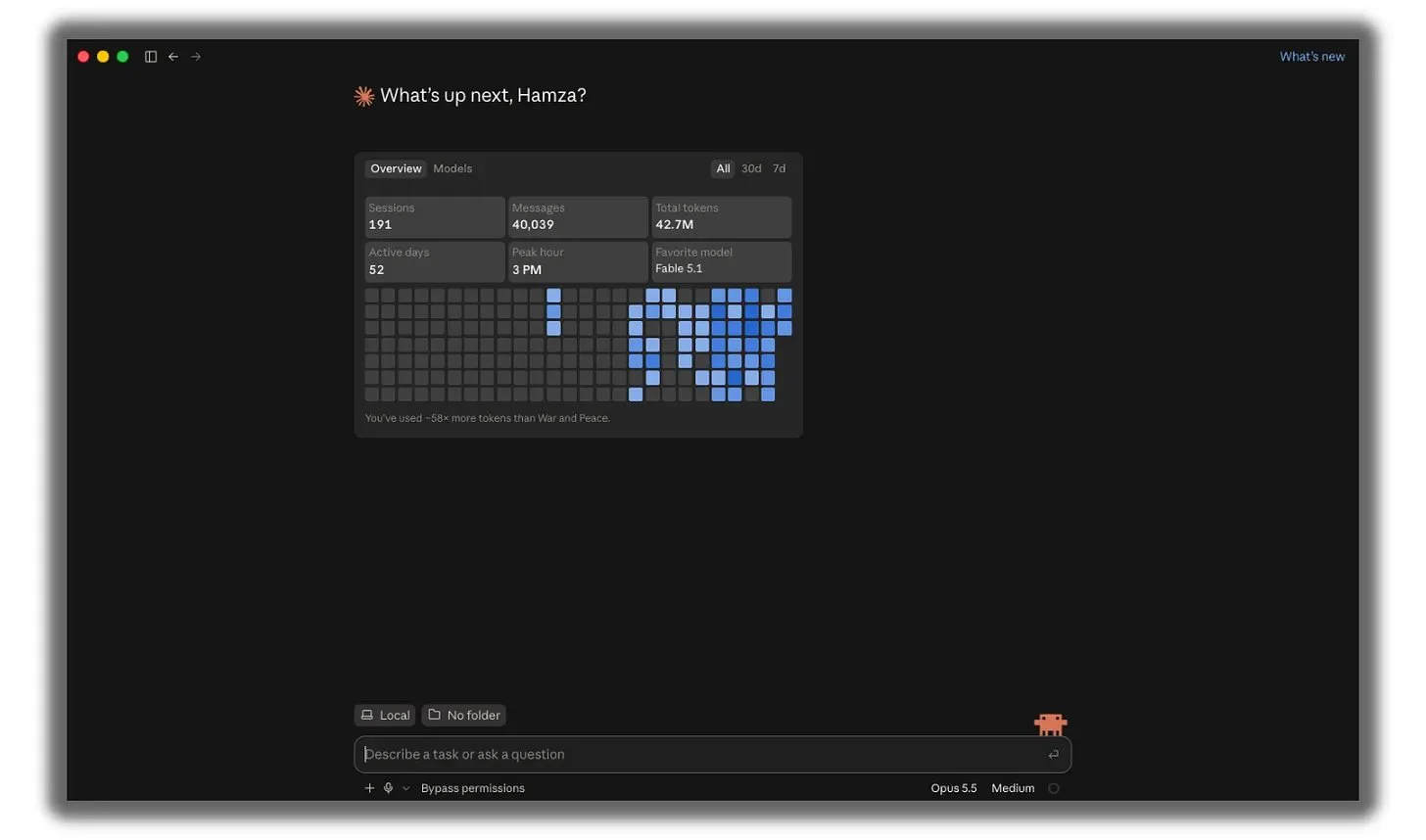
*Step 1: open Claude Code. Photo: Hamza Khalid.*
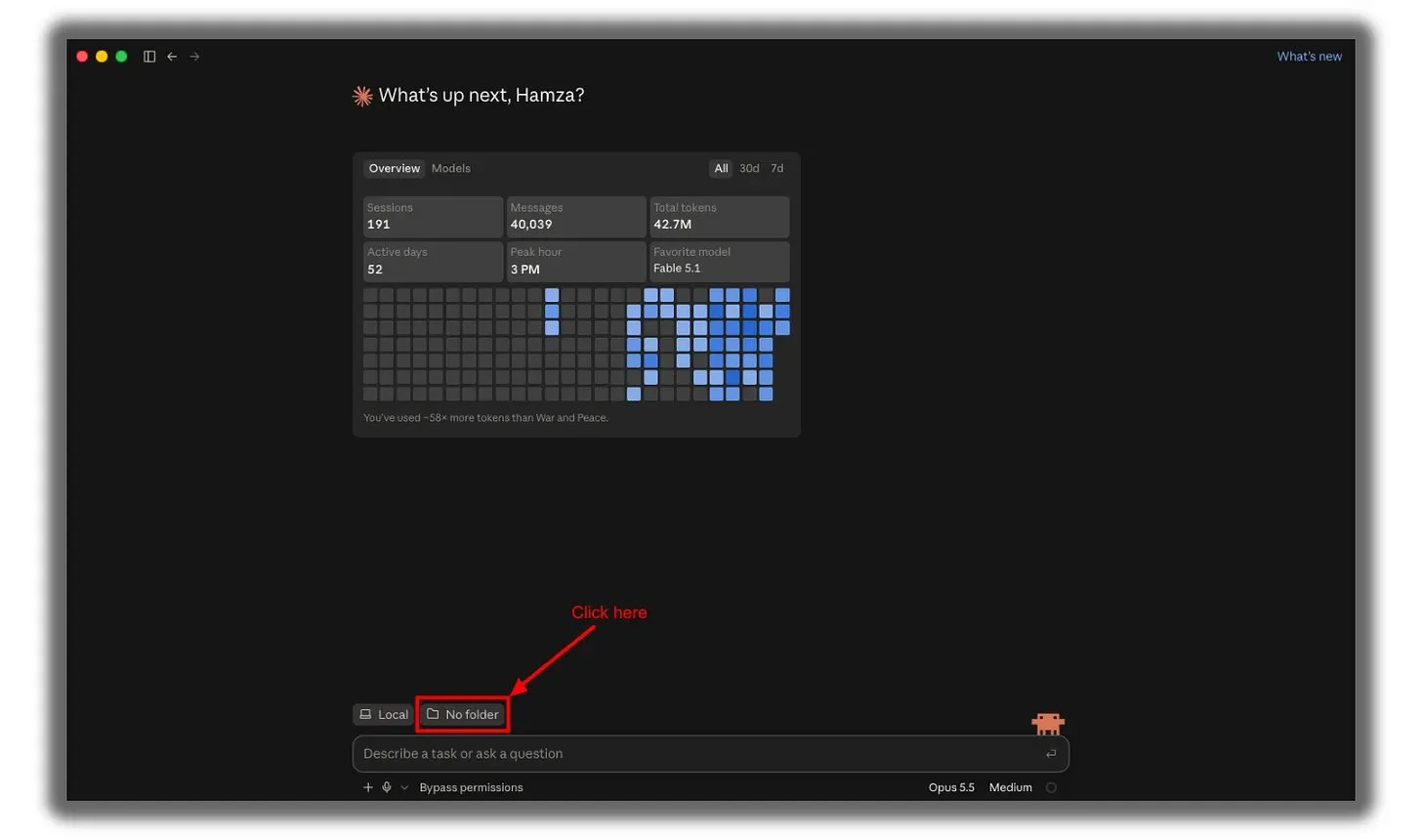
*Step 2: click on the No folder box. Photo: Hamza Khalid.*
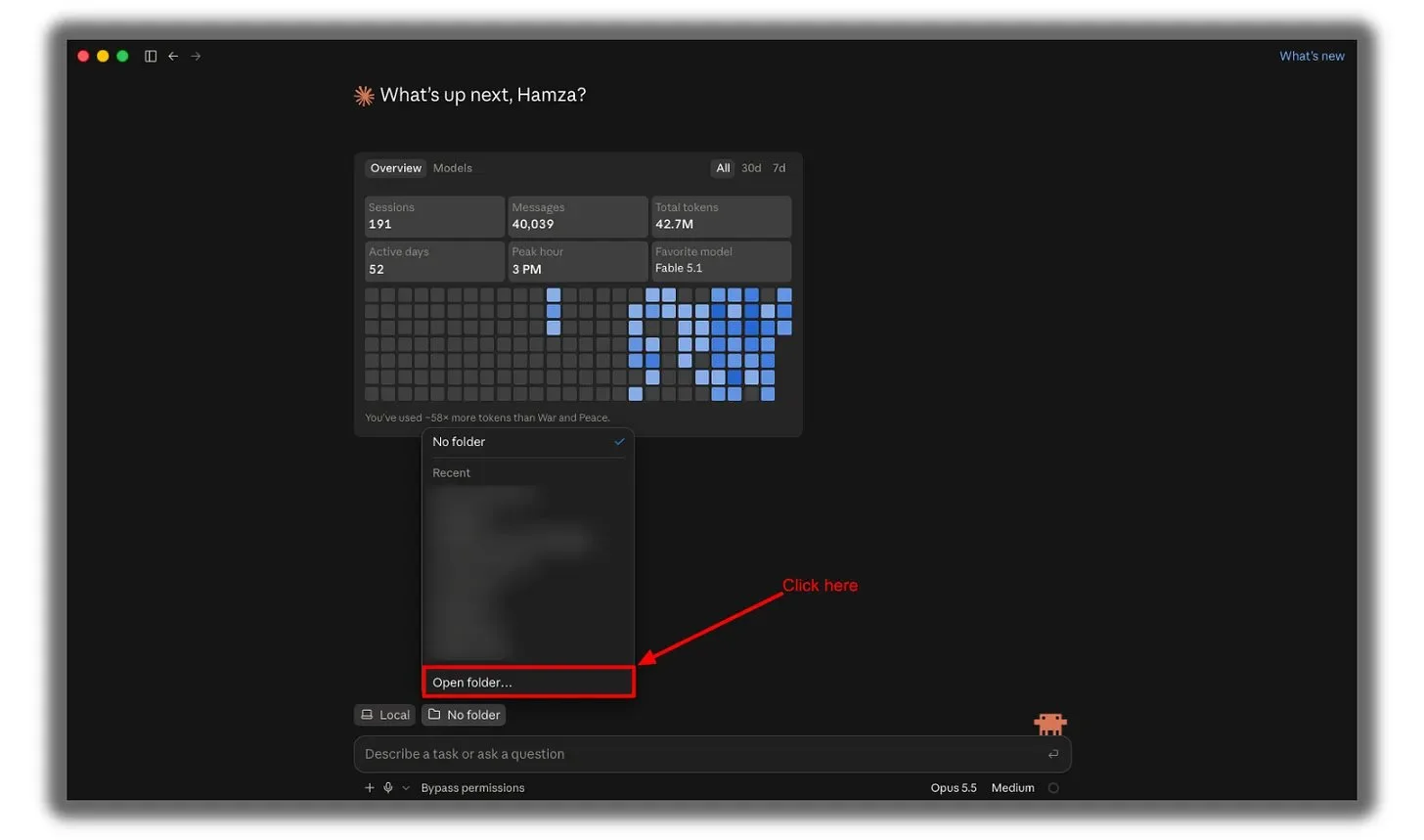
*Step 3: select Open folder. Photo: Hamza Khalid.*
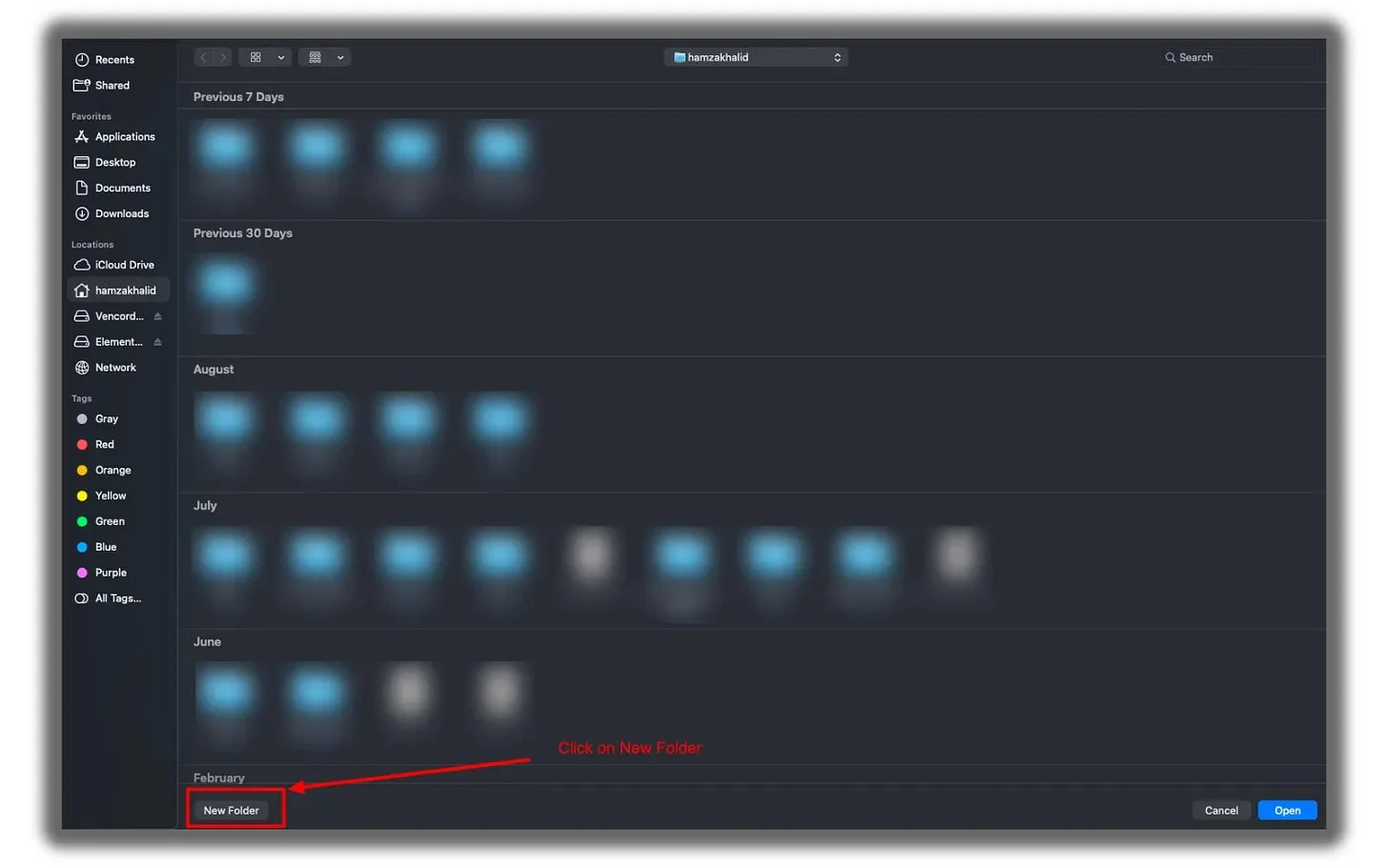
*Step 4: click New Folder. Photo: Hamza Khalid.*
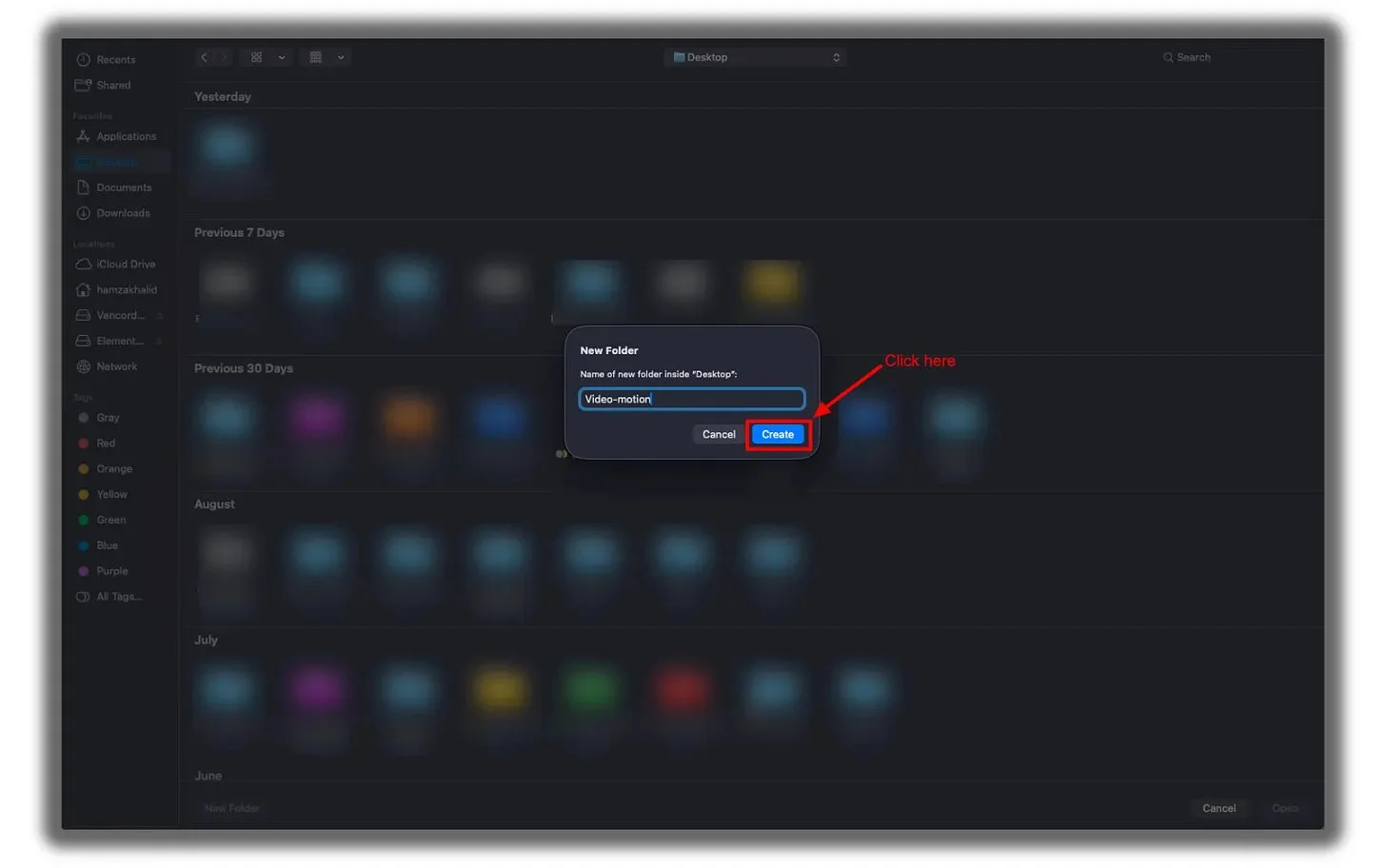
*Step 5: name it and click Create. Photo: Hamza Khalid.*
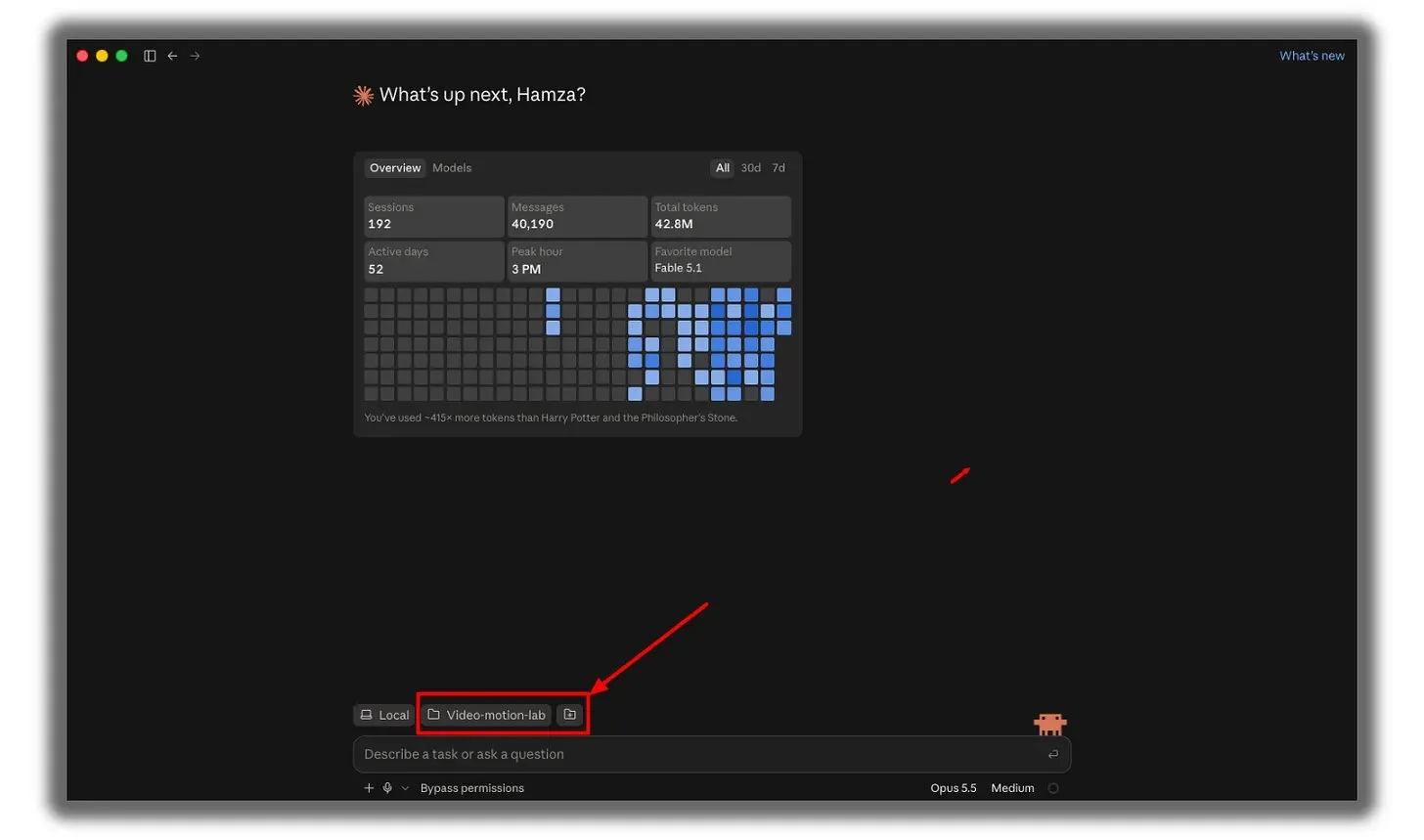
*Step 6: folder is now selected. Photo: Hamza Khalid.*
## Step 2: Which code reference repositories should Claude see?
Claude needs to see video code to understand how it's built, because the model relying only on memory will pick the most "average" animation it has ever seen. The author used 8 reference sources, each handling one part of the job: music video, animation starter kit, canvas drawing, HTML framework, React framework, full-length film, command library and dataset. OPCAIOS checked each repository on GitHub on October 23, 2026, according to GitHub descriptions and star counts in the table:
| Role | Source | Description (from GitHub) | Stars, license |
|---|---|---|---|
| Music video | [JohnHeibel/PDoomVideo](https://github.com/JohnHeibel/PDoomVideo) | Source code for "I'm Upping My P(doom)" music video made with Claude Opus 5.5 | about 2,500 stars, no license listed |
| Animation starter kit | [JohnHeibel/ClaudeAnimationBase](https://github.com/JohnHeibel/ClaudeAnimationBase) | Hand-drawn animation starter kit using p5.js and p5.brush, character Clawd, 31 emotions | about 1,580 stars, MIT |
| Canvas drawing | [buildwithhanif/claude-animation-skill](https://github.com/buildwithhanif/claude-animation-skill) | 2D hand-drawn animation written in code, pure Node and FFmpeg | 42 stars, MIT |
| HTML framework | [heygen-com/hyperframes](https://github.com/heygen-com/hyperframes) | "Write HTML, render video, for AI agents" | about 70,000 stars, Apache-2.0 |
| React framework | [Remotion Skills](https://www.remotion.dev/docs/ai/skills) | Remotion skill set (source code at [remotion-dev/skills](https://github.com/remotion-dev/skills)) | about 5,500 stars |
| Full-length film | [WinterArc21/Battle-of-Austerlitz-Film](https://github.com/WinterArc21/Battle-of-Austerlitz-Film) | 5-minute film using WebGL, synthesized audio and narration | 25 stars |
| Command library | [guanmo-ai/awesome-ai-motion](https://github.com/guanmo-ai/awesome-ai-motion) | Curated videos and animations with source code, commands | about 410 stars |
| Dataset | [athemeroy/awesome-claude-5-5-videos](https://github.com/athemeroy/awesome-claude-5-5-videos) | List of Claude 5.5 videos with sources, commands, tools | about 730 stars, CC-BY-4.0 |
Two small notes. First, the last repository in the original post was named `awesome-opus-5-5-videos` but has since been renamed to `awesome-claude-5-5-videos` (the old link still redirects). Second, Remotion is documentation, not cloneable like the other repositories, so it gets installed as a skill in the next step.
### How do I clone all eight repositories at once?
You don't need to clone each repository separately; cloning means downloading a repository from GitHub to your machine. The author wrapped this into a single command to paste into Claude Code (Anthropic), with a request to check that Node.js 22 or higher, git and FFmpeg are installed before cloning, and using `GIT_LFS_SKIP_SMUDGE=1` for HyperFrames to skip large test videos. According to the author's screenshot, the 8 repositories take about 560 MB. Here's the condensed version of that command:
```
In this directory, create a subdirectory "repos" and clone these repositories into it:
https://github.com/JohnHeibel/PDoomVideo
https://github.com/JohnHeibel/ClaudeAnimationBase
https://github.com/buildwithhanif/claude-animation-skill
https://github.com/heygen-com/hyperframes
https://github.com/WinterArc21/Battle-of-Austerlitz-Film
https://github.com/guanmo-ai/awesome-ai-motion
https://github.com/athemeroy/awesome-claude-5-5-videos
For HyperFrames, skip large test videos (use GIT_LFS_SKIP_SMUDGE=1).
Before cloning, check for Node.js 22+, git and ffmpeg; install any missing.
When done, list each repository with a line explaining what it does.
```
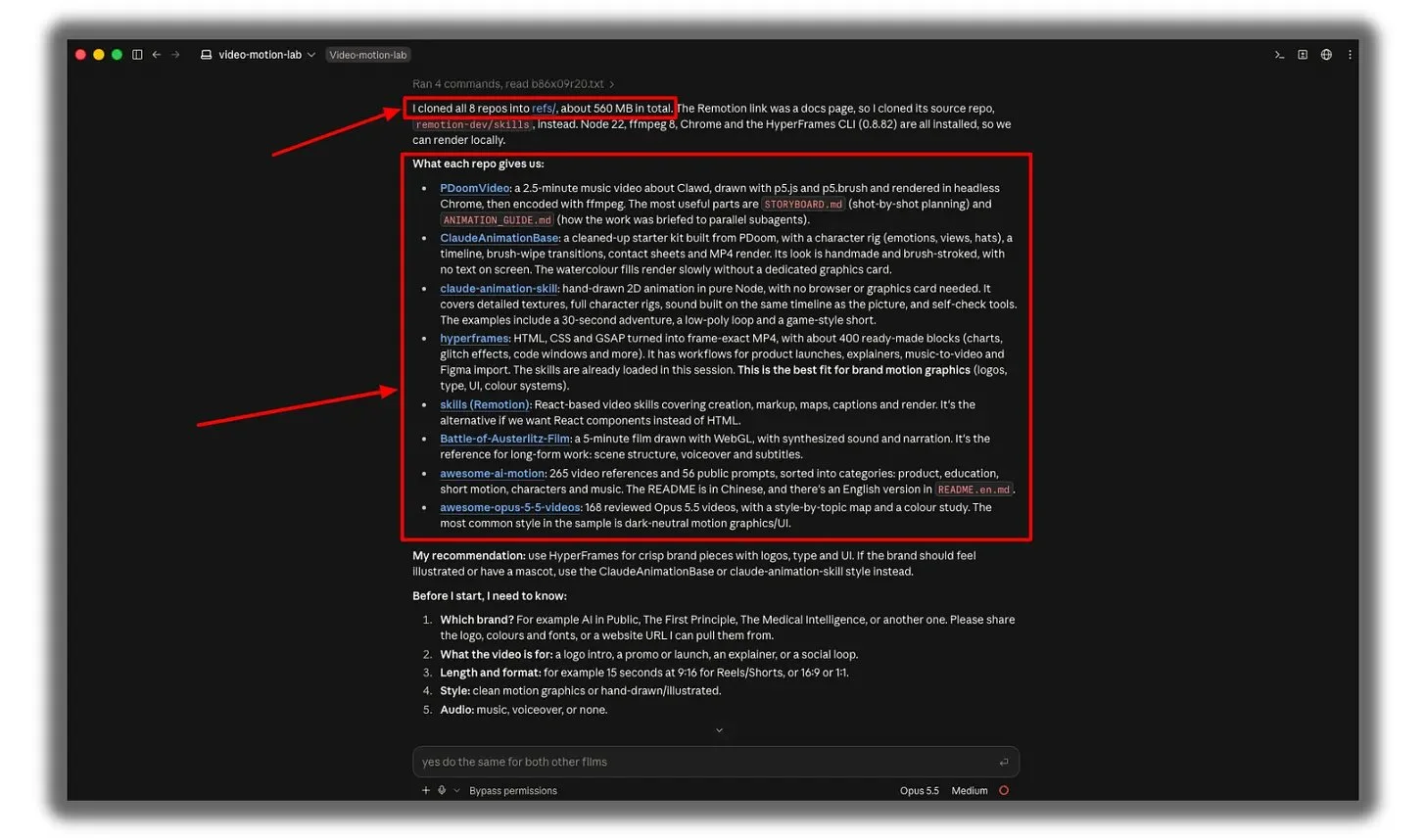
*Result: Claude finishes cloning the repositories (about 560 MB according to the author's screenshot), summarizes each repository and suggests using HyperFrames for brand design, ClaudeAnimationBase for illustrated style with mascot. Photo: Hamza Khalid.*
## Step 3: What skills should I install so Claude doesn't have to guess?
Skills are packages of instructions that tell Claude the working rules of each framework. The code repository shows Claude what a good product looks like, while skills provide the rules so it does things the way that framework expects. Paste these commands one by one into your terminal:
```bash
npx skills add remotion-dev/skills
claude plugin marketplace add heygen-com/hyperframes
claude plugin install hyperframes@hyperframes
claude plugin marketplace add buildwithhanif/claude-animation-skill
claude plugin install claude-animation@claude-animation-skill
```
Cross-check against each project's documentation: the `npx skills add remotion-dev/skills` command is correct as shown on the Remotion guide page; the two HyperFrames plugin commands and the two claude-animation commands are correct as shown in their READMEs. The claude-animation README also requires running `npm install` in the skills folder after installation, and needs Node 20 or higher plus FFmpeg.
## Should I use HyperFrames, Remotion or claude-animation?
Choose based on the type of video you want, just as Claude itself summarized in the author's screenshot:
- **HyperFrames (HTML, CSS, GSAP):** best for sharp branded videos with logos, text, interfaces and color schemes; has hundreds of pre-built components like charts, noise effects, code windows.
- **Remotion (React):** use this if you want to build with React components instead of HTML.
- **ClaudeAnimationBase and claude-animation-skill:** good when the brand needs a hand-drawn feeling, with characters or mascots; the downside is that watercolor strokes render slowly if your machine doesn't have a dedicated graphics card, and the README recommends asking Claude to use different effects instead when running on integrated graphics.
## What do I need to prepare before asking Claude to build a video?
You need a short brand summary: Claude will ask you about exactly these things before starting, according to the author's screenshot:
1. **Which brand:** logo, colors, fonts or website address so Claude can fetch them itself.
2. **What the video is for:** logo reveal, ad, product intro, explainer video or social media loop.
3. **Length and aspect ratio:** for example 15 seconds vertical 9:16 for Reels or Shorts, or horizontal 16:9, or square 1:1.
4. **Style:** clean motion graphics or hand-drawn illustration.
5. **Audio:** music, voiceover or none.
The rest of the original process (detailed brand summary, the `CLAUDE.md` file, the exact command to build the video and how to fix rendering errors) the author kept in his newsletter, so this post doesn't have those original parts. Practical tip: keep the brand rules in `CLAUDE.md` so each new video reads them again, and ask Claude to write the storyboard before coding; the ClaudeAnimationBase README also recommends doing this, along with trying both very broad and very detailed instructions.
## Notes before you follow along
Notes before you follow along are five points about hardware, licensing and data reliability:
1. **Hardware requirements:** Node.js 22 or higher (HyperFrames), git and FFmpeg; ClaudeAnimationBase also needs Google Chrome. The repositories total around 560 MB according to the author's test run.
2. **Thinking level affects complexity:** according to ClaudeAnimationBase's README, all test videos used Opus 5.5 at xhigh thinking level, and the higher the level the more intricate and detailed the scenes.
3. **Licensing:** some repositories don't list a license (for example PDoomVideo); if you reuse other people's assets in a commercial product, check the license or ask the author.
4. **Author's numbers:** the figures about views, costs and time are stories in the original post and haven't been independently verified.
5. **OPCAIOS experience:** this blog's diagrams and cover images were also built with code (write HTML then screenshot with Chrome headless), different in that they're static images instead of video.
If you're new to this, read more at [Which AI model should I choose?](/blog/chon-model-ai) to weigh costs by task, [What is Claude Sonnet 5.5?](/blog/claude-sonnet-5-5-la-gi) for a faster and cheaper option, and [AI writes code in the wrong version](/blog/ai-viet-code-sai-phien-ban) to understand why you should give AI reference documentation before asking it to write code.
## Frequently Asked Questions
### Do I need to know design to make motion graphics with Claude?
Not necessarily. According to the original author, you only need a brand image or a product sales page address and a command, but the results depend largely on setting up your directory, reference library, and skills like those in this post.
### What do I need to install for Claude to build video with code?
You need Claude Code, Node.js 22 or higher, git and FFmpeg; depending on the framework you may also need Chrome. Then install the skills for Remotion, HyperFrames and claude-animation using the commands in Step 3.
### How are HyperFrames and Remotion different?
HyperFrames builds video from HTML, CSS and GSAP, suitable for brands with logos, text, interfaces. Remotion builds with React components. Choose based on the language you know and the type of video you want to make.
### Why does running the full viral command still produce bad video?
Because Claude lacks brand guidelines, templates and rules so it has to guess. The author tried running a viral command as-is and ran into floating character heads, text color clashing with background; pre-setup helps avoid that.
### If I want to learn how to use AI for real work, where do I start?
You should start with a small repeatable process with clear setup like this post. According to Hamza Khalid, setup accounts for 90% of results, so first create a brand folder, next have Claude see your reference library and install skills, finally write the command to build the film. For example, a small shop could make one 15-second 9:16 intro video for Reels using Claude Code (Anthropic) before scaling to a video series. See [OPCAIOS's AI application training course](/services/dao-tao-ung-dung-ai).
*Source: blog post by Hamza Khalid (AI in Public) on X, [x.com/humzaakhalid/status/2105203643758895454](https://x.com/humzaakhalid/status/2105203643758895454), posted 30/9/2026; images and video taken from the original post as requested, belonging to the author; original post only released the intro section of the guide. Code library, install commands and Claude Opus 5.5 release date (22/9/2026) cross-checked against GitHub, Remotion site and Anthropic announcement site as of 23/10/2026. Figures on views, cost and time are from the author, not verified.*